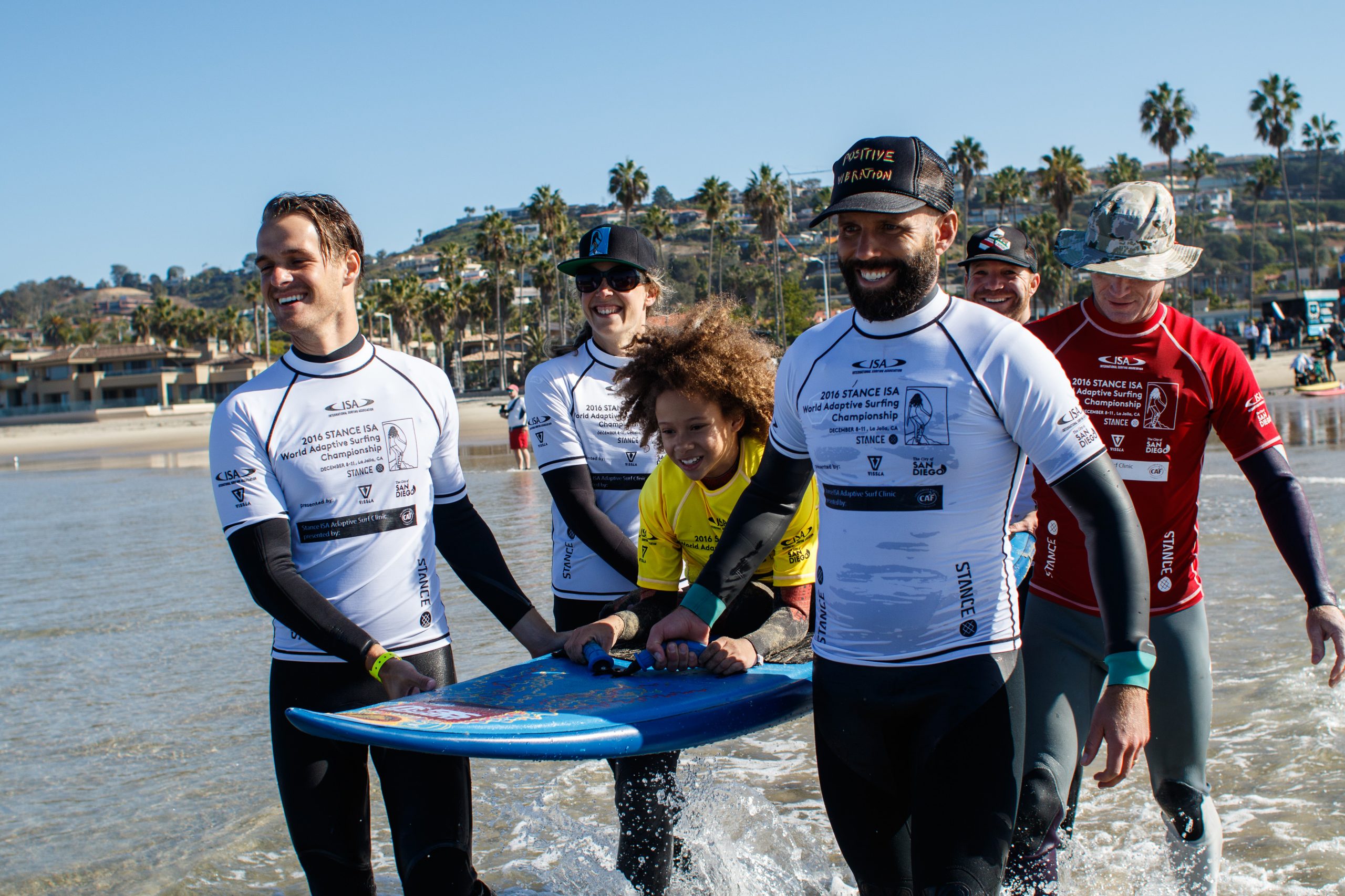
What is Para Surfing Classification?
Classification is a process where certified Para Surfing Classifiers assess the strength, flexibility, balance, and coordination of competitive adaptive surfers in order to group the athletes with permanent impairments into one of the nine Para Surfing Sport Classes.
The classification goal is to accurately allocate the athlete into their best surf class to ensure high competition and a more leveled playing field to minimize the impact of impairments on the sport performance.
The ISA Para Surfing Classifiers begin with establishing if an athlete has an underlining health condition which can lead to an “IPC approved” or eligible impairment.
Next, the classifier panel will assess if the impairment(s) meets the Minimum Impairment Criteria.
ISA Para Surfing has 7 Physical Para Surfing Classes and 2 Visual Sport Classes.
Are you an occupational therapist, physical therapist, or medical doctor interested in becoming a Para Surf Classifier? Please click here to learn more about the 2026 Para Surfing Classification Training.
| Para Surfing Sport Classes | ||
| Sport Class | Description | |
| Para Surfing Stand 1 | Surfers who ride waves in a standing position with an upper body impairment. | |
| Para Surfing Stand 2 | Surfers who ride waves in a standing position with a lower body impairment below the knee. | |
| Para Surfing Stand 3 |
|
|
| Para Surfing Kneel/Upright | Surfers who ride waves in a kneeling or upright position. | |
| Para Surfing Sit |
|
|
| Para Surfing Prone 1 |
|
|
| Para Surfing Prone 2 | Surfers who ride waves in a prone position and need assistance to paddle into waves and while in the water. | |
| Para Surfing Vision Impairment 1 | Surfers who have a visual impairment defined by IBSA Sport Class B1. | |
| Para Surfing Vision Impairment 2 | Surfers who have a visual impairment defined by IBSA Sport Class B2 and B3. | |
| 8 IPC* Approved Eligible Impairments | ||
| Physical Body Function Impairments (3) | Physical Body Structure Impairments (2) | Visual Impairments (3) |
| Impaired Passive Range of Motion | Limb Deficiency | IBSA Vision Impairment B1 |
| Impaired Muscle Power | Leg Length Difference | IBSA Vision Impairment B2 |
| Coordination Impairments from Hypertonicity/Spasticity, Motor Ataxia, or Dyskinesia | IBSA Vision Impairment B3 | |
| *IPC=International Paralympic Committee | ||
Explanations of Terminology:
Approved underlying health conditions or medical diagnoses include, but are not limited to, spinal cord injuries, brain injuries, strokes, cerebral palsy, multiple sclerosis, short stature, congenital limb deficiencies, leg length differences, amputations, and vision impairments.
The 8 Paralympic eligible impairments are impaired passive range of motion, impaired muscle power, limb deficiency, leg length difference, short stature, coordination impairments from hypertonicity/spasticity, motor ataxia, or dyskinesia, vision, and intellectual impairment. At this time, intellectual impairment and short stature are not used in Para Surfing.
There are several impairments, that although they do impair function, they are considered “Non-Eligible Impairments” for Para Surfing. Examples of non-eligible impairments include pain, hearing impairment, low muscle tone, hypermobility, joint instability, endurance, and poor respiratory functioning according to the International Paralympic Committee.
Each Para Surfing Surf Class has minimal impairment criteria for each eligible impairment. The minimal impairment criteria has been established based on the impairment being enough of an impairment that it affects the sport of surfing. For example, although amputated fingers are recognized as an impairment, missing fingers is not enough of an impairment to impact the sport of surfing. Refer to the “ISA Para Surfing Classification Rules and Regulations” for the listing of each eligible impairment, minimal impairment criteria, and description of each Para Surfing Class.
Credits:
Thank you to the following experts and organizations for their contributions to the development of the Para Surfing Classification system:
ISA Para Surfing Classification Rules and Regulations 2024
Para Surfing Sport Classes Quick Reference Table 2024
ISA Para Surfing Classification Overall Master Classification List Dec 2025
ISA Para Surfing Classification Para Sport Classes and Minimial Impairement Criteria 2024
Medical Diagnostics Form (MDF)
Vision Medical Diagnostics Form
If you have interest in future classification opportunities or questions about classification please contact us at [email protected].
Welcome to ISA Para Surfing Classification,
Thank you for trusting us to provide you with an excellent classification process at ISA Para Surfing events.
At ISA Para Surfing, it is our goal to provide you with the most accurate and evidence-based classification process possible. Each classifier is an expert in their field of occupational therapy or physical therapy, they have received and passed an international certification program for Para Surfing classification, and they are surfers themselves.
We believe each surfer is a unique individual with distinct abilities. Our team of classifiers will assess you and classify you into your best surf class to ensure we have the most optimal leveled playing field for all competitors.
I personally want you to have the best experience possible and I look forward to watching you compete at such an elite level.
Sincerely,
Dr. Mo Johnson, PhD, MS, OT/L, BCPR, C/NDT, IC
ISA Para Surfing Head of Classification
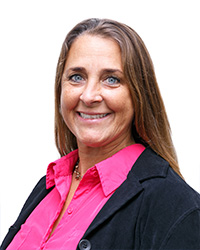
Dr. Maureen Johnson, PhD, MS, OT/L, BCPR, FNAP, CHSE-A, C/NDT
Head of International Classification for Para Surfing
Dr. Mo is an occupational therapist with Board-Certification in Physical Rehabilitation and an Assistant Professor at the University of St. Augustine for Health Sciences in San Diego, California. Dr. Mo earned her PhD in Education and post professional Master of Science degree and Bachelor of Science degree in Occupational Therapy. In addition, Dr Mo is Certified in advanced Neuro-Developmental Treatment. Dr. Mo began has worked in a variety of settings to include Rancho Los Amigos National Rehabilitation Center in Los Angeles, California; Scripps Memorial Hospital Rehabilitation in San Diego, California; Peace Corps, Paraguay in South America, and Tijuana, Mexico. She has 30 years of clinical experience working with people with neurological involvement such as spinal cord injuries, brain injuries, and strokes with the focus of helping these individuals return to their daily occupations and lifestyles. Years of experience has taught Dr. Mo that the most important thing in life is that people are living their lives to the fullest.
While attending surf competitions for her daughters, Dr. Mo encountered and met several adaptive surfers and learned the true meaning of passion as she observed these athletes competing at such high skill levels despite their physical obstacles. Dr. Mo began volunteering to assist the athletes navigate the beach and ocean terrains. As the number of athletes increased, she started bringing her occupational therapy graduate and doctorate students to help volunteer as well.
At the University of St. Augustine for Health Sciences, Dr. Mo teaches Anatomy Applied to Occupations, Patient/Client Care Management, and Assistive Technology. In the Assistive Technology course, Dr. Mo aligned the student community volunteer hours and course assistive technology project with adaptive surfing. From their volunteer experiences, the occupational therapy students have been inspired to create designs with 3D Printing for surfing technology, adapt surfboards, adapt wetsuits, adapt beach towels, adapt beach clothing, and one student is responsible for designing Access Trax which are portable mats to go over sand. All these versions of assistive technology were inspired by the adaptive surfers to help promote the independence of the athletes.
With her love for surfing and shared passion for advancing the sport of para surfing, she joined the Stoke for Life Foundation as Director of Classification for the US Open Adaptive Surfing Championship (ASC) and was instrumental in leading the structure for the surf classes at the US Open ASC. Dr. Mo used the success of this structure in collaboration with the ISA and the Adaptive Surfing Classification Review Committee to form the Para Surfing Sport Classes that are now in use.
Dr. Mo enjoys spending time with her husband and three children in, on, or under the ocean surfing, sailing and SCUBA diving. Surfing is a strong part of her family’s lifestyle. Many of her family’s best moments and connections are in the water together.
As ISA Para Surfing Head of Classification, Dr. Mo is honored and humbled to have this opportunity to serve the international competitive para surfing community. For the past three years, she has gained experience and researched knowledge on Paralympic Classification for the development and progression of para surfing within the Paralympic movement. Dr. Mo believes each surfer is a unique individual with distinct abilities. Dr. Mo’s primary purpose is to ensure each surfer is classified professionally and accurately so surf contests have fair and equitable competition. She is currently conducting four separate research studies to investigate the efficacy of the Para Surfing Sport Classes.